Masters of the Baroque
BAROQUE SERIES
Thursday 23 & Friday 24 April 2026, 7.30pm
His Majesty's Theatre

West Australian Symphony Orchestra respectfully acknowledges the Traditional Custodians and Elders of Country throughout Western Australia, and the Whadjuk Noongar people on whose lands we work and share music.
How to use your Digital Program
Masters of the Baroque
George Frideric HANDEL Judas Maccabaeus: Overture (7 mins)
George Frideric HANDEL Il delirio amoroso: Un pensiero voli in ciel (8 mins)
George Frideric HANDEL Il Trionfo del Tempo e del Disinganno: Tu del ciel ministro eletto (8 mins)
Arcangelo CORELLI Concerto grosso in G minor Op.6, No.8 Christmas Concerto (13 mins)
Interval (25 mins)
Johann Sebastian BACH Concerto for Harpsichord in D minor BWV 1052 (24 mins)
Giovanni PERGOLESI L’Adriano in Siria: Sinfonia (4 mins)
Carl Heinrich GRAUN Cleopatra e Cesare: Tra le procelle assort (9 mins)
Heinrich BIBER Battalia à 10 (10 mins)
Georg Philipp TELEMANN Overture-Suite in G major La Bizarre: Rossignol (2 mins)
Chad Kelly director/harpsichord
Prudence Sanders soprano
Listen to WASO
This performance is recorded for broadcast Thursday 14 May, 1pm (AWST) on ABC Classic. Date subject to change. For further details visit abc.net.au/classic
WASO On Stage
About the Artists

Chad Kelly
Director / Harpsichord
Sydney-based British keyboardist and conductor Chad Kelly is in demand across opera, symphonic repertoire, historically informed performance, and contemporary music. He is currently on the music staff at Opera Australia, having spent several seasons at the Bavarian State Opera in Munich and at English National Opera in London.
Dedicated to historically informed performance, Chad has conducted at prominent early music festivals and venues across Europe and the UK, including Göttingen Händelfestspiele, Vienna’s Resonanzen Festival, London’s Globe Theatre, the Duke of York’s Theatre, and the London Handel Festival, where he led Lampe’s The Dragon of Wantley. He has collaborated with distinguished ensembles across the early music scene, serving as principal keyboardist of the award-winning collective Solomon’s Knot and guest directing both the Academy of Ancient Music and the Australian Chamber Orchestra.
Building on his early music expertise, Chad made his Opera Australia conducting debut with Purcell’s Dido and Aeneas and has led performances of Handel’s Messiah with the Melbourne Symphony Orchestra. For Victorian Opera, he arranged and conducted a new adaptation of Mozart’s Die Entführung aus dem Serail, presented under the title Abduction and praised for its freshness and contemporary perspective.
Chad’s arrangements and compositions have been recorded on the Sony and Channel Classics labels. A frequent collaborator with violinist Rachel Podger, his version of Bach’s Toccata & Fugue in D minor can be heard on her award-winning album Tutta Sola. He also created a pioneering arrangement of Bach’s Goldberg Variations for Rachel and Brecon Baroque, released in 2023 by Channel Classics. This reimagining of the work, in the spirit of Bach’s own transformative practice, earned critical acclaim for its inventive chamber adaptation.
Adept in the world of contemporary music, Chad has helped create new work by composers Thomas Adès, Hans Abrahamsen, and Mark-Anthony Turnage, and has workshopped several new pieces for the Royal Opera House, Covent Garden.
In 2025, Chad debuted with the Sydney and Queensland Symphony Orchestras, conducting music he co-wrote with the Australian band King Gizzard & The Lizard Wizard as part of their Phantom Island tour. In 2026, he makes major conducting appearances in Perth, Melbourne, and Christchurch, and tours with the Australian Chamber Orchestra. In 2026, he conducts the Melbourne, West Australian, and Christchurch Symphony Orchestras, and leads Victorian Opera’s season of The Coronation of Poppea.
Educated at Cambridge University and the Royal Academy of Music, Chad became Lector in Music at Trinity College, Cambridge, and was elected Associate of the Royal Academy of Music in recognition of his contribution to the profession. He continues to mentor young musicians as a guest lecturer at the Guildhall School of Music and Drama and the University of Melbourne.
Show more...
About the Artists

Prudence Sanders
Soprano
A graduate of WAAPA and the Guildhall School of Music and Drama, Prudence Sanders is a principal artist with West Australian Opera, making her role debut in 2020 as Fiordiligi in the Glyndebourne Festival production of Così fan tutte. Other roles for WAO include Susanna in Le Nozze di Figaro, Madame Herz (Der Schauspieldirektor), Michaëla (Carmen), Rapunzel (Into the Woods), Eurydice/ Amore (Orfeo ed Eurydice), and Mabel (Pirates of Penzance).
During her time in the UK, she performed at the Royal Festival Hall, Wigmore Hall and Royal Albert Hall, and recorded and performed with the BBC singers, London Voices, Opera Rara, and the Royal Opera House.
Prudence has appeared as a soloist with the West Australian Symphony Orchestra, Perth Symphony Orchestra, and Australian Baroque. She made her Perth Festival debut in 2021, singing the title role in an adaptation of Dvořák’s Rusalka with Freeze Frame Opera, and in 2024 was nominated and awarded a Performing Arts WA Award (PAWA) for most outstanding performer in a supporting role for Opera/Musical Theatre.
In 2025, Prudence received a second PAWA nomination for her role as Amore/Eurydice and made her debut with Sydney Philharmonia (soprano soloist, Mozart Requiem). In 2026, Prudence will sing the role of Stella in A Streetcar Named Desire and will return as soloist with Sydney Philharmonia.
Show more...
About the Music
Text & Translation
Text & Translation
Text & Translation
About WASO

Engage | Excite | Experience | Educate
From the centre of Perth to the furthest corners of the state, we have provided the soundtrack to life in WA since 1928.
As the State Orchestra, Perth’s first and finest, WASO is the largest employer of performing artists in Western Australia and reaches two million people with musical experiences each year on stage, in our community, and online.
From concert stages to classrooms, hospitals to aged care, we bring joy, inspire learning, and nurture participation in our community, because everybody deserves the opportunity to experience live music. Every year, through community and leading industry partnerships, we engage a new generation of young and emerging artists to help secure a bright future for music in Australia.
We celebrate our rich classical music heritage with great artists from all over the world and commission and perform new repertoire to renew and expand it. The Orchestra collaborates widely with major arts companies and independent artists, performing opera to ballet, movies to musicals, jazz to rock.
Asher Fisch is Principal Conductor and Artistic Adviser of our Orchestra. We champion the diversity of music in all its forms, with a team of talented and passionate people who create unforgettable experiences for all West Australians to enjoy.
Show more...
Your Concert Experience

Get the best out of your concert experience at His Majesty's Theatre.
- Explore the music
Be sure to take a quick look at the performance schedule or enjoy a deep dive into the music with your concert program online or in the foyer. - Share with your friends
Snap a selfie from your seat, capture the artist bows and share the experience with friends. Don’t forget to tag us! #wasymphonyorchestra - Clap with enthusiasm
Whether you are welcoming your favourite artist to the stage, or showing appreciation at the end of a piece, we love thunderous applause. Not sure when to clap? Here’s a tip; if the conductor’s arm is raised, hold it. If it’s relaxed, go for it! - Respect those around you
Ensure your mobile phone is on silent and does not disrupt the experience of those around you. If you need to cough or sneeze, please do this into your elbow. - Accessible services available
For information about our services such as assisted hearing, lifts and accessible toilets, please ask one our friendly Front of House team members.. - Latecomers admitted at a suitable time
If you arrive late or leave your seat during a performance, your auditorium entry will need to wait until a suitable break. - First Aid available
St John First Aid officers are present at every WASO concert. Please notify a team member if you require any first aid assistance. - Box Office is open
Get tickets to your next WASO experience at the Box Office located on the ground level of His Majesty’s Theatre. The Box Office is open from 9am on the day of performance. Alternatively, you can visit waso.com.au to buy online or book an in-person ticketing appointment by calling (08) 9326 0000.
Show more...
WASO Recommends

If you enjoyed tonight's concert, we think you'll love:
Art of the Baroque
Satu Vänskä brings her dazzling virtuosity to the His Majesty’s Theatre stage, leading music of brilliance and intensity from Baroque masters Vivaldi and Bach, alongside Tartini’s fiery Devil’s Trill Sonata and the expressive beauty of Gesualdo. Satu finishes the concert with her stunning, specially curated selection of works by the great French master, Jean-Philippe Rameau. This is Baroque music at its most vivid!
Thursday 29 & Friday 30 October, 7.30pm
His Majesty's Theatre
Show more...
Music for the Ages
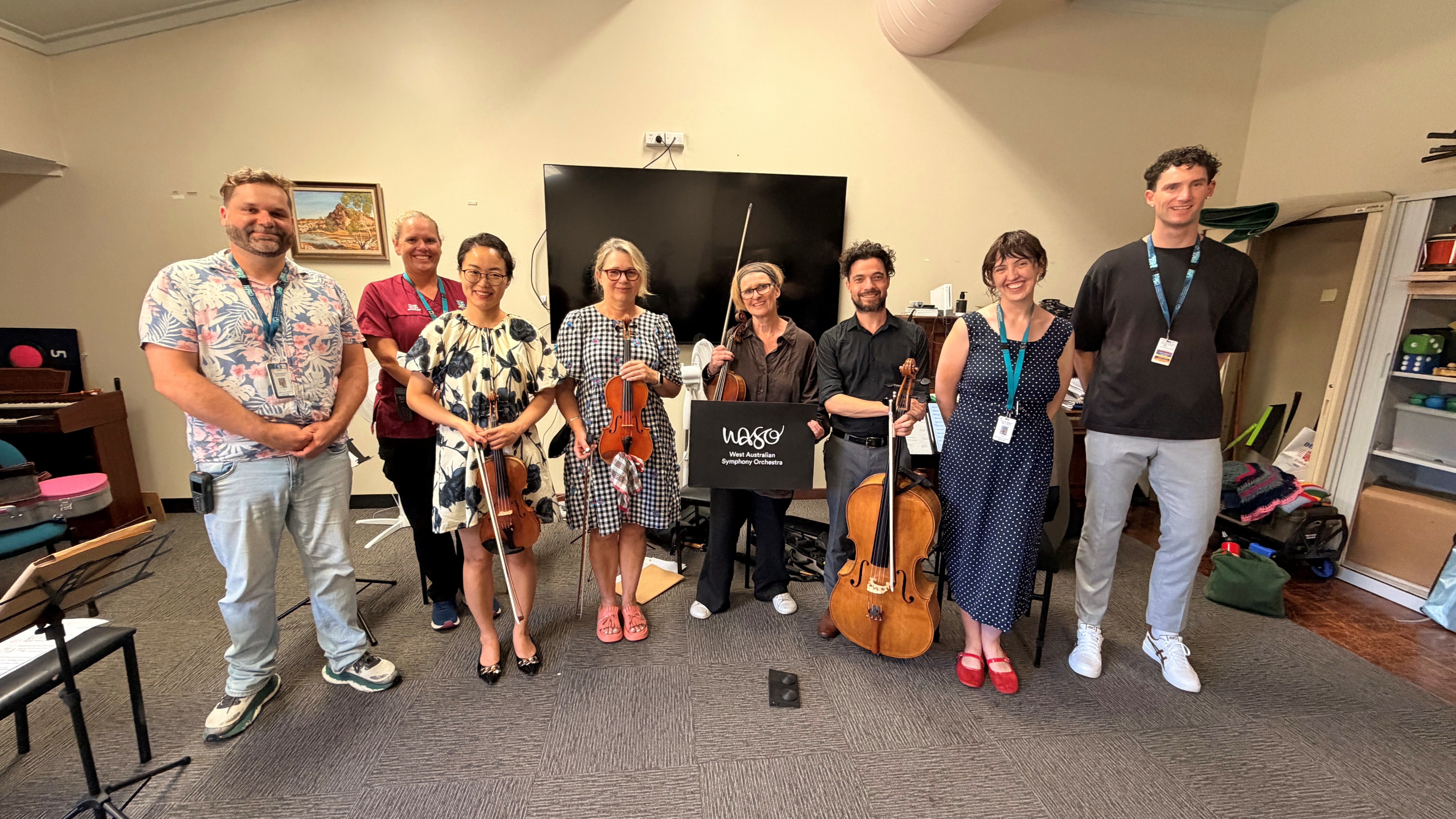
From the jaunty La traviata Brindisi to the gentle unfurling notes of Air on the G String, WASO has been delighting seniors around Perth with a broad range repertoire as our aged care concerts take flight for 2026.
Two string quartets have been out on the road visiting seniors groups, aged care, and retirement living centres across the city.
Highlights from this season include a visit to an aged care site that accommodates homeless people aged 65+, whose coordinator said “I found the sounds of the instruments really emotional – which could have something to do with our facility housing homeless and mental health residents being stressful and I felt the music wash this away. We have residents with depression who find it difficult to get out of bed and they came to the concert and stayed for the whole performance.”
WASO musicians also got toes tapping with a visit to the music club at Selby Lodge – a mental health facility that provides services for older adults who had “not stopped raving about the performance” since WASO visited in late February.
Show more...
Annual Giving: The Difference You Make
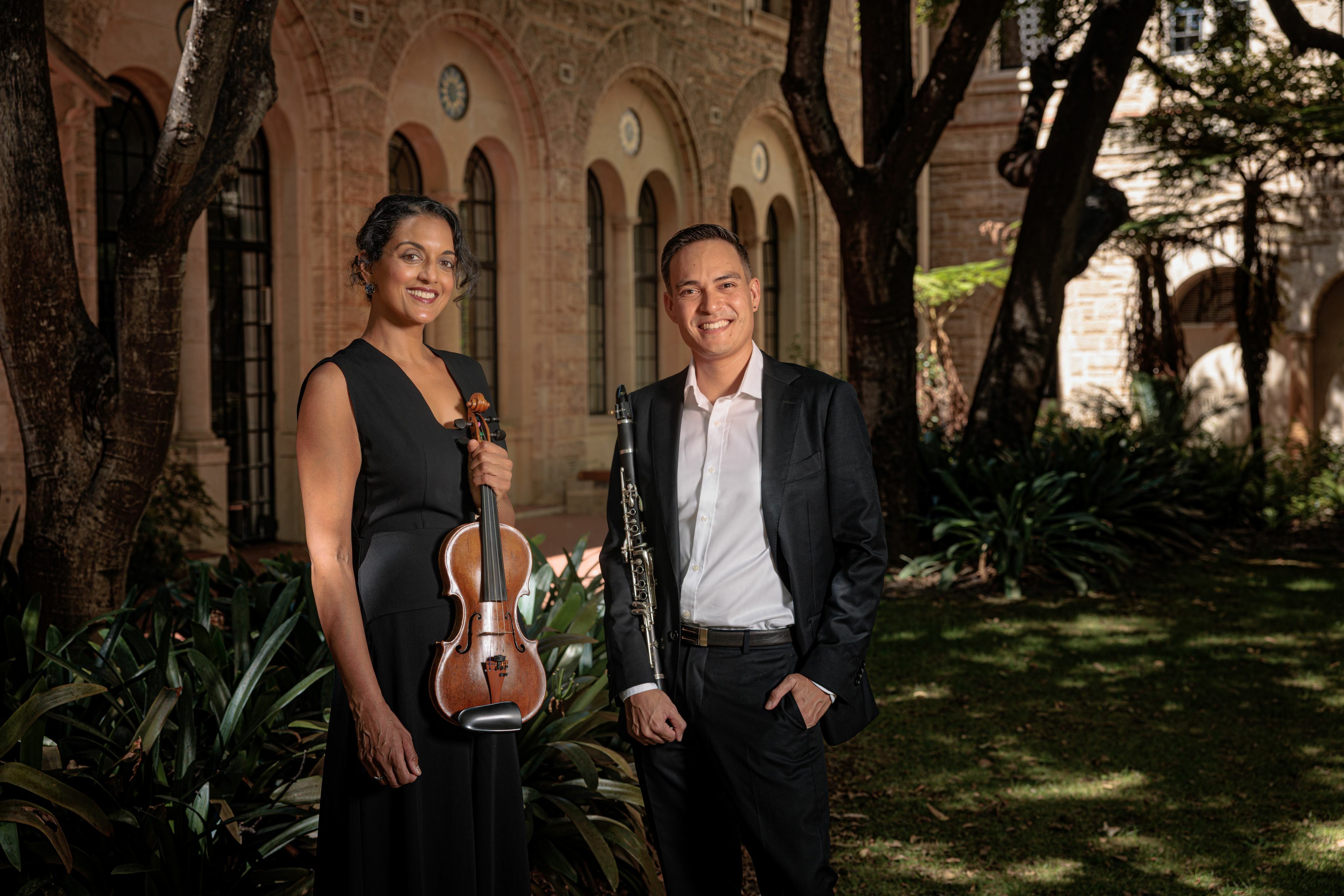
Today’s performance is the result of an extraordinary collaboration between musicians, conductors, guest artists, staff, volunteers and you, our audience.
At the heart of this shared experience is the generosity of WASO’s giving community. Through Annual Giving, one of the most important pillars supporting your Orchestra, donors help sustain every aspect of our work.
Their support enables WASO to present inspiring concerts, engage outstanding artists and bring symphonic music to audiences across Western Australia. It also provides vital, flexible funding for both artistic and operational needs, supporting musicians on stage and the dedicated teams behind the scenes.
Annual Giving also makes possible education and community programs that connect young people and new audiences with live orchestral music.
The impact of this support is felt in the quality of every performance; the opportunities we create for artists and the communities we reach. Just as importantly, it provides the stability needed to plan for the future with confidence.
For many, giving is a meaningful way to express a belief in the enduring value of music and its role in enriching cultural life.
We invite you to support WASO through Annual Giving.
Your generosity helps ensure this music continues to inspire today and for generations to come.
To make a gift, please contact our Philanthropy team on (08) 9326 0016 or visit our website.
Show more...
Our Supporters